Most "best lead platform" lists are written by one of the platforms on the list, and they tend to rank themselves first. This one is written by the team behind DealSherpa, which is one of the ten below, so here's how we kept it fair: every other platform is described only from what it says on its own website (checked November 9, 2026), we don't quote anyone's prices but our own, and we say who each one suits, including when it isn't us.
What counts as a motivated seller lead
A motivated seller lead is a property owner with a reason to sell soon, and usually a reason to accept less than full retail price for a fast, simple sale. The reason is the whole point. An owner who is curious about their home's value is not a motivated seller. An owner whose house is two months from a foreclosure auction is.
The reasons fall into a few groups:
- Money trouble: a missed mortgage, a foreclosure filing, back property taxes, liens.
- A life event: a death in the family, a divorce, a job move.
- A problem house: code violations, fire damage, a condemned or vacant building.
- A tired landlord: an eviction, a long vacancy, an owner who lives far away.
- A deadline: an auction date, a probate timeline, a tax sale.
Every lead you can buy is one of two kinds. An inbound lead is a homeowner who filled out a form or called about selling. A list lead is an owner who shows up in a public record, like a court filing, and hasn't contacted anyone yet. Both can close. They cost different amounts and need different follow-up.
Three ways to buy motivated seller leads
Pay-per-lead marketplaces run ads (Google, Facebook) or calling campaigns, collect homeowners who say they want to sell, and sell each one to an investor. You pay per lead. The lead is warm, because the seller asked, but you're paying for the vendor's marketing, so each lead costs far more than a record on a list.
Calling services put a team of callers on a list you choose and pass you the owners who are open to an offer. You pay for the callers, not for data, and your time stays free.
List platforms give you the records themselves, usually for a monthly fee: who is in pre-foreclosure, probate, tax delinquency and so on, matched to the property and the owner. Nobody has called these owners for you. You reach them yourself by phone, text, mail or door knock, which is cheaper per lead and slower per deal.
Plenty of investors use more than one. A common mix is a list platform for steady volume plus a few marketplace leads in a market they want to grow fast.
The 10 platforms at a glance
| Platform | What you buy | How you pay | Who gets the lead | Best for |
|---|---|---|---|---|
| iSpeedToLead | Inbound seller leads you preview first | Per lead, priced by age and score | Exclusive and shared tiers | Picking leads one by one |
| PropertyLeads.com | Inbound leads in counties you pick | Per lead, your own bid and budget | One buyer per lead | Hands-off delivery by county |
| Motivated Leads | Inbound leads, or ad campaigns run for you | Per lead, or a custom campaign | Exclusive | Investors who want a done-for-you ad partner |
| Leadzolo | Inbound leads four different ways | Bids, marketplace, membership or managed ads | Exclusive or shared, by program | Mixing price and volume |
| Alpha Leads | Calls to your lists by a trained team | A plan per caller | Exclusive | Working lists without dialing yourself |
| DealSherpa | Distress records from court and county filings | One monthly plan | Public records | Fresh probate and pre-foreclosure lists plus a CRM |
| PropStream | Nationwide property data and lists | Monthly plan | Public records | Pulling lists anywhere in the country |
| BatchLeads | Property data, lists and outreach tools | Monthly plan | Public records | Lists plus calling and texting in one place |
| DealMachine | Property and owner data, driving for dollars | Monthly plan | Public records | Investors who drive for dollars |
| PropertyRadar | Property and owner data with alerts | Monthly plan | Public records | Automated alerts and mail |
"Public records" means the same filing is open to anyone who looks for it. What you're paying a list platform for is speed, matching and the tools around it, not exclusivity.
Pay-per-lead marketplaces
1. iSpeedToLead
A marketplace where you browse available seller leads and see the property, the seller's situation and an AI score before you buy each one. Leads are grouped by age, from exclusive leads in their first day to older shared ones at lower prices, and there's an auto-buy mode that purchases leads matching rules you set. Their site lists a CRM, follow-up tools and a refund policy. It suits investors who want to judge every lead before paying for it.
2. PropertyLeads.com
Inbound home seller leads by county. You pick your counties, set your own bid and a monthly budget, and leads arrive on your phone and in your CRM in real time, each one sold to a single buyer. Their site offers live transfers of calling sellers and lists refunds for mobile homes, houses already on the MLS, wholesalers and spam. It suits investors who want leads to show up without shopping for each one.
3. Motivated Leads
Pay-per-lead seller leads from the counties you choose, all exclusive, with refunds for leads that don't meet their standard, according to their site. They also run custom ad campaigns inside your own ad account. It suits investors who may later want their own ads run for them instead of buying leads one at a time.
4. Leadzolo
Four ways in, per their homepage: real-time bidding on fresh exclusive leads, a lower-cost marketplace, a shared pool called Zolo Club on a flat monthly membership, and a managed ad service called Leadzolo Platinum. It suits investors who want to trade freshness for price, or volume for exclusivity, without switching vendors.
Calling services
5. Alpha Leads
Instead of selling leads from ads, Alpha Leads puts trained callers on the lists you send, with pre-foreclosure, code violation and tax delinquent lists named on their site, and hands you exclusive leads with the call recordings. It suits investors who have good lists and no time to dial them. It pairs naturally with a list platform.
List platforms
6. DealSherpa
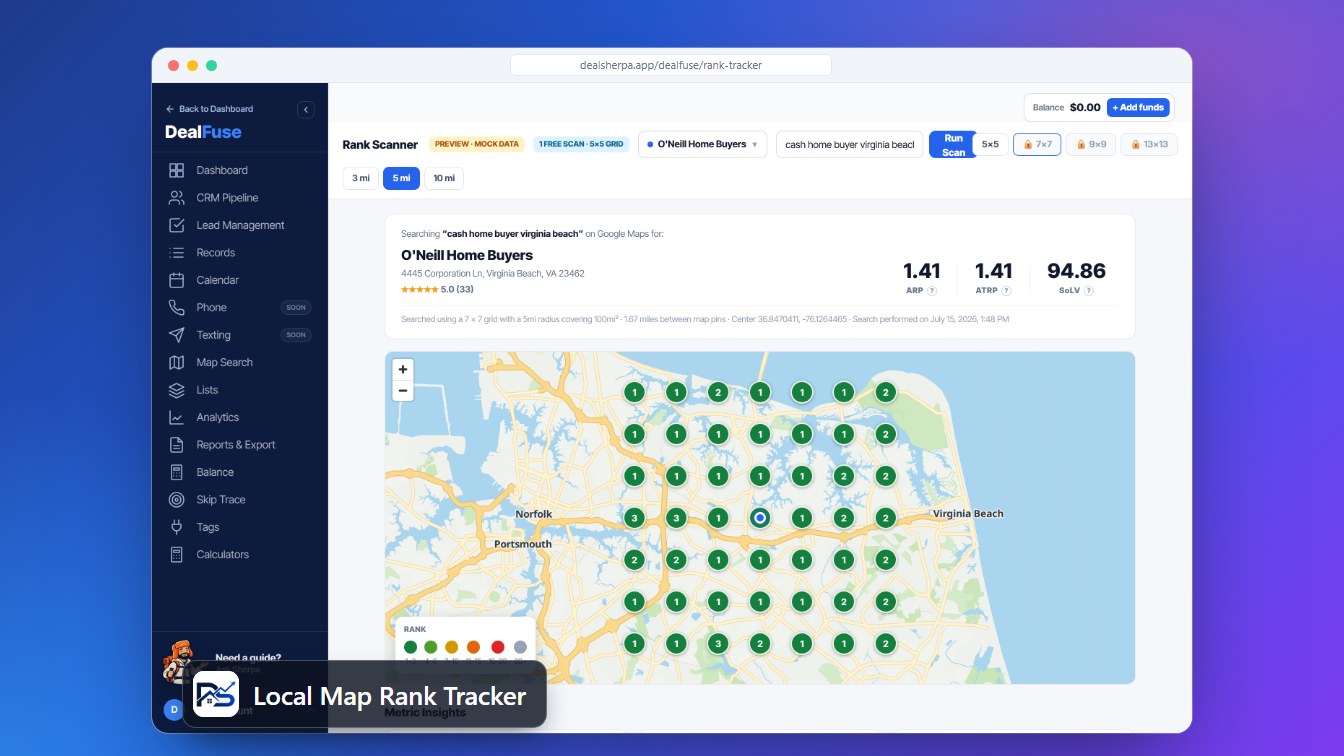
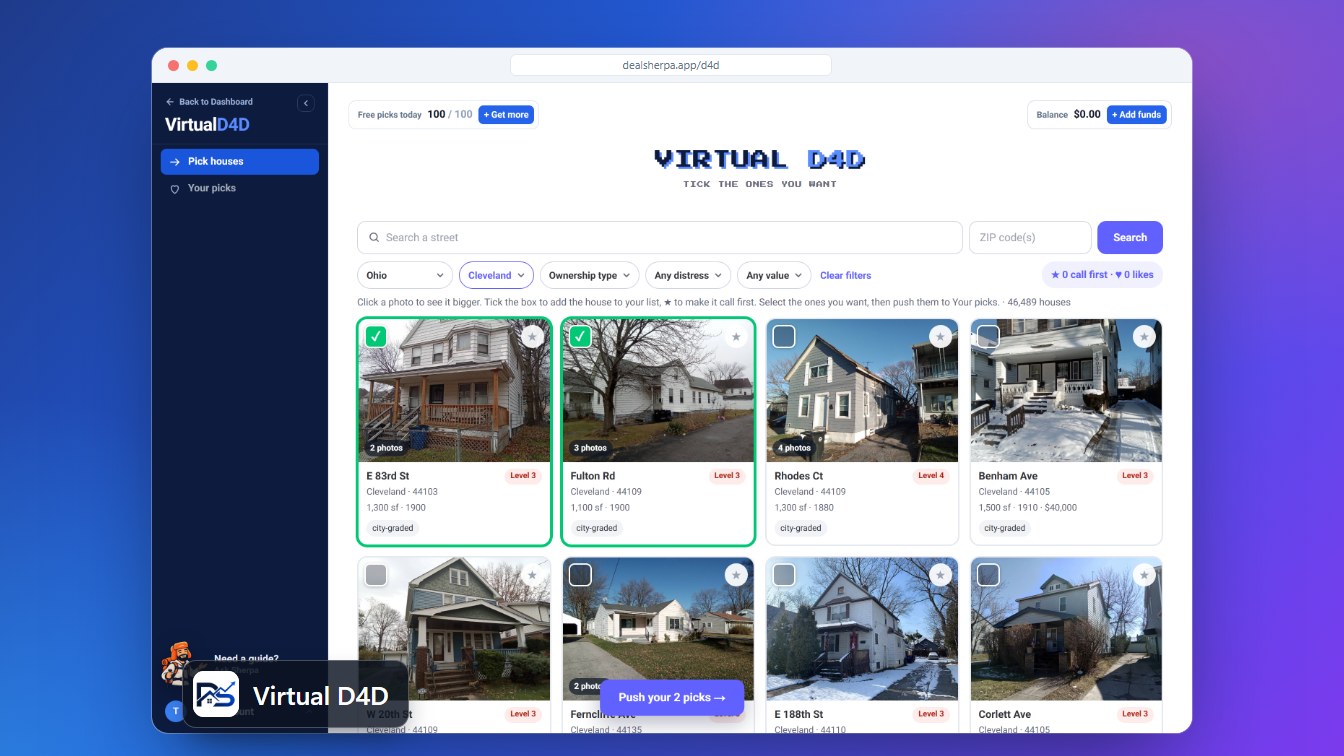
This is us. DealSherpa Pro collects distressed-property records straight from court and county sources: tax delinquent, probate, foreclosure, code violations, evictions and more, updated every weekday. Each record is matched to the house, every lead shows the date it was filed, and a house that turns up on more than one list is flagged so you call it first. The plan also includes Virtual D4D (houses reviewed from their street photos and scored 1 to 5 for visible distress), the DealFuse CRM with follow-up sequences, and DealSign for offers and contracts. It's $99 a month or $950 a year, with a 3-day free trial. Skip tracing is pay as you go at 12¢ per owner searched.
Who it isn't for: DealSherpa opens market by market, so if you need every county in the country today, a nationwide data platform below will cover more ground. See what's in each list.
7. PropStream
A nationwide real estate data platform with lead lists, comps, skip tracing and marketing tools, per their site. It suits investors who want to pull lists in many markets from one account.
8. BatchLeads
Property search with AI, skip tracing, one-click lead lists, outbound campaigns and CRM features in one platform, per their homepage. It suits investors who want the list and the outreach in the same tool.
9. DealMachine
Nationwide property and owner search, skip tracing, list building and a driving for dollars app, per their site. It suits investors who find deals on the road. We wrote a full DealMachine comparison if you're choosing between us.
10. PropertyRadar
Property and owner data with built-in skip tracing, plus alerts and postcards that keep running once you set them up, per their homepage. It suits investors who want outreach to run on its own once a list is set up.
How to tell if a lead is really motivated before you pay
Whichever way you buy, look for proof of a reason, not just interest. These are the things worth checking:
- A dated record. A foreclosure filing, a probate case or a tax sale notice has a date on it. Fresh is better. A lead with no date could be months old.
- A deadline. An auction date or a court timeline means the owner has to decide soon.
- The owner matches the house. On a list lead, the person on the filing should own the property. In probate, the person who died should have owned it, and you want the executor or petitioner as your contact.
- More than one problem. A house that is behind on taxes and has code violations is a stronger lead than either alone.
- How the seller was found. For inbound leads, ask the vendor where the lead came from and what the seller actually said.
Exclusive vs shared leads
An exclusive lead is sold to one investor. A shared lead goes to several, and the first one to call usually wins. Exclusive leads cost more per lead. Shared leads cost less but reward speed, so they only make sense if you can call within minutes.
Public-record lists are a third case. The filing is open to everyone, but most investors don't pull it the day it's filed. Getting the record early and reaching the owner first is what wins.
Work out your cost per deal, not your cost per lead
The price of a lead tells you very little on its own. What matters is what you spend to sign one contract. Add up everything you spent in a month (leads, list subscription, skip tracing, mail, calling time) and divide by the contracts you signed. A cheap lead that never converts costs more than an expensive one that does.
Run a small test before you commit: one market, one month, one budget you can afford to lose. Track every lead in a CRM so you know which source produced each contract.
Questions to ask any lead seller
- Where do the leads come from, and how old are they when I get them?
- Is each lead sold to one buyer or several?
- What happens if the number is wrong or the owner never answers? Is there a refund or a replacement?
- Is there a contract, a minimum spend, or a minimum length?
- Did the seller agree to be contacted? (This matters for calls and texts.)
- Can I export the leads or send them straight to my CRM?
If a vendor won't answer these plainly, move on.
Where to start
If you'd rather pay per lead and judge each one, start with a marketplace. If you have lists but no time to dial, add a calling service. If you want a steady supply of fresh distress records and the tools to work them, a list platform is the cheapest place to start.
DealSherpa is built for that last case: motivated seller lists from court and county records, matched to the house, with the CRM and contracts in the same login. See pricing or start the 3-day free trial.
DealSherpa is not affiliated with any other company named here. Their details come from their own websites on November 9, 2026, and may have changed since. Check each site for current pricing and terms.
Frequently asked questions
What is a motivated seller lead?
A property owner with a pressing reason to sell soon, such as a foreclosure filing, back taxes, a death in the family, a divorce or a house with code violations, who is often willing to take less than full price for a fast, simple sale.
Where can I buy motivated seller leads?
From pay-per-lead marketplaces (iSpeedToLead, PropertyLeads.com, Motivated Leads, Leadzolo), from calling services that dial lists for you (Alpha Leads), or from list platforms that sell the public records themselves (DealSherpa, PropStream, BatchLeads, DealMachine, PropertyRadar).
How much do motivated seller leads cost?
It depends on how you buy. Marketplaces charge per lead, often more for exclusive and fresh leads. Calling services charge for the callers. List platforms charge a monthly fee for the records. DealSherpa Pro is $99 a month or $950 a year, with skip tracing at 12¢ per owner searched. Prices change, so check each vendor's own pricing page.
Are exclusive leads worth paying more for?
Often, yes, if you can't call within minutes. A shared lead goes to several investors and the fastest one usually wins. Judge it by cost per signed contract, not cost per lead.
Are motivated seller lists better than pay-per-lead leads?
Neither is better for everyone. A pay-per-lead seller has already raised their hand, so it costs more per lead. A list lead hasn't been contacted yet, so it costs far less but takes more outreach. Many investors use both.
How do I know if a lead is really motivated?
Look for a dated record, a deadline such as an auction or court date, an owner who actually matches the house, and more than one problem on the same property. For inbound leads, ask the vendor how the seller was found and what they said.
Can I call or text the leads I buy?
Check the rules first. The National Do Not Call Registry and the Telephone Consumer Protection Act limit calls and texts, especially automated ones to cell phones without consent. Ask your vendor what consent comes with each lead, and talk to an attorney about your outreach.
 DealSherpa Team